
I grew up with one lesson my parents repeated often: do not lose hope, work hard, and never support something wrong, even when standing for the truth becomes uncomfortable. I still ask myself whether that is easy advice to follow in the real world, because the world is not always fair to people who speak honestly. Many times I have found myself standing for what I believe is right, and standing nearly alone.
My name is Jayaswori Sharma. My journey into Clinical Embryology did not begin with a clear destination in sight. Even after completing my Master's degree in Biotechnology, I was still searching for where I truly belonged. But something inside me always resisted settling. I wanted to learn deeply, work sincerely, and contribute to something that genuinely mattered.
It was during my Master's research in Biotechnology that things began to take shape. My supervisor showed us how to learn, experiment, and keep going even when resources were scarce. Our research explored an alternative male contraceptive approach using plant extract, grounded in a question that felt both simple and important: when so many contraceptive options are targeted at women, why should that responsibility fall almost entirely on them?
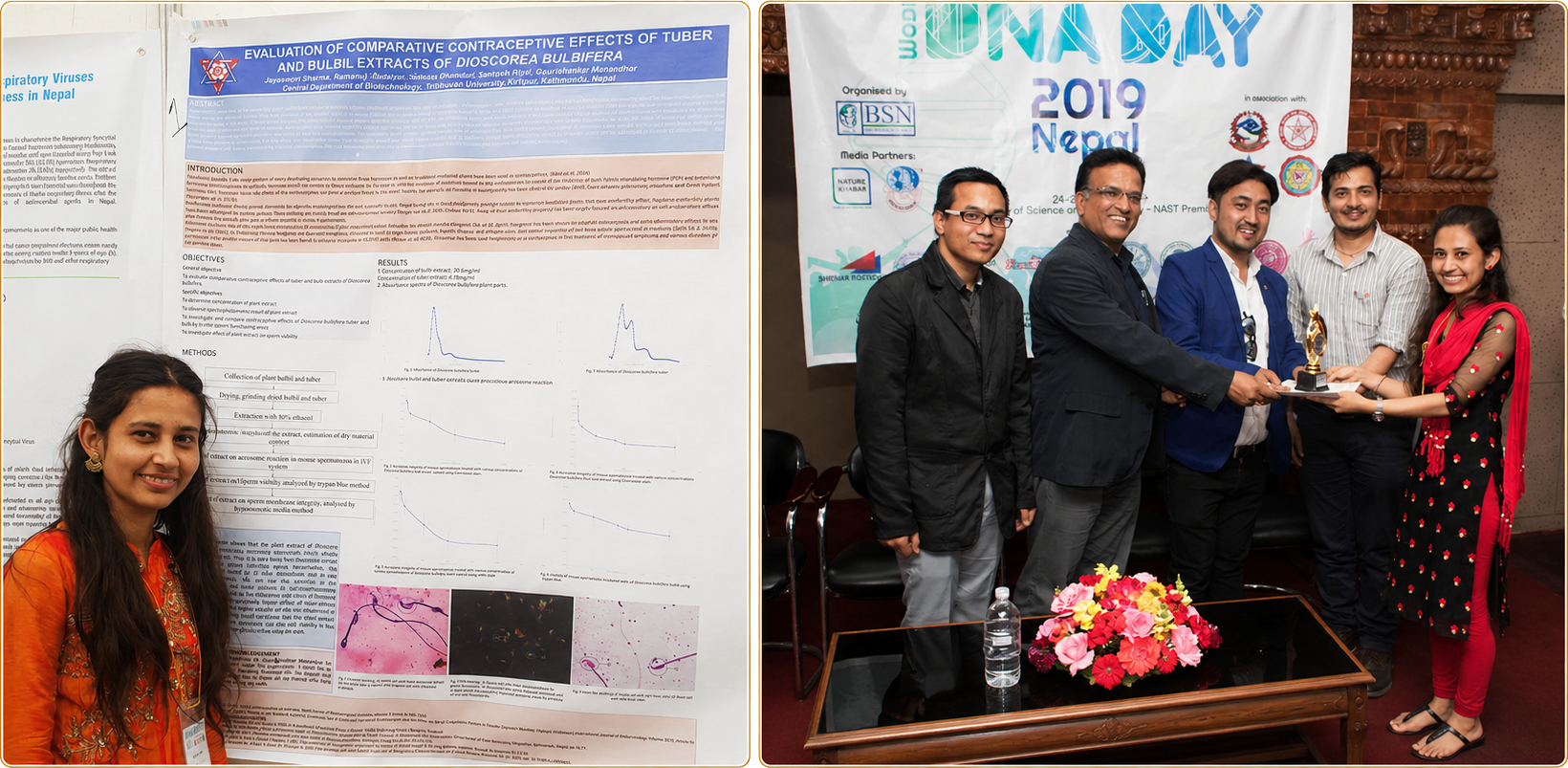
That research became my first serious window into reproductive biology. I learned epididymal sperm collection through mouse dissection, media preparation, buffering systems, sperm handling, staining techniques, microscopic observation, and the use of hormonal stimulation protocols. We also worked with ovarian tissue and oocyte-related procedures. Limitations in resources, including the appropriate mouse strain and hormonal support needed for ovarian hyperstimulation, meant we had to rethink our experimental approach and move toward an in vivo method. We did not complete everything as originally planned, but we produced meaningful results within the constraints we had.
I was proud of that work. I remember unlocking the college laboratory as early as 6 AM and not leaving until 9 PM. Those hours were spent preparing diluted extract solutions through repeated pipetting, performing dissections, staining samples, observing sperm under an inverted microscope, and working with fluorescent microscopy. At one seminar, I was even able to explain fluorescent microscopy to one of my teachers, which stayed with me.
At the time, I did not fully see how closely that research connected to the career I would eventually choose. Looking back now, those techniques laid the foundation for everything that followed.
After observing my interest and commitment, a senior who was pursuing his PhD suggested I consider joining an IVF center. He told me that my effort and scientific background could make a real difference for couples struggling with infertility. I hesitated at first, because the opportunity was in India, and I was not ready to leave Nepal. Eventually, with his encouragement, I entered the IVF field in Nepal instead.
I was genuinely excited. I felt I had finally found the place where my academic background, laboratory skills, and personal interest could come together. But professional reality was harder than I had expected. Many people would find it difficult to imagine what I went through during that period. I faced humiliation, discouragement, and comments that shook my confidence. I kept going anyway, because deep down, I knew this was where I was meant to be.
It was while working inside the system that I began to sense something was seriously wrong.
Conversations seemed to orbit entirely around achieving a "positive result," with very little reflection on how that result was being reached. What troubled me most was how rarely anyone paused to acknowledge what we were actually handling. These are not just samples, numbers, or lab reports. These are human gametes and embryos, biological material that may eventually lead to the birth of a new human life. That reality demands ethics, documentation, transparency, scientific understanding, and genuine respect for every step of the process.
During my early professional exposure, I encountered practices that raised serious concerns. Poor handling of laboratory media, questionable counselling approaches, weak documentation, an absent consent culture, inappropriate use of donor samples, careless attitudes toward patient material, and an overconfidence that did not match the sensitivity of the work being done. When I asked basic scientific questions about media, protocols, or procedures, I rarely received clear answers. Rather than developing inside a structured and ethical learning environment, I found myself surrounded by people who themselves needed deeper training and scientific grounding.
What hurt just as much was the attitude toward newcomers. In a profession that should actively encourage learning and scientific discussion, new professionals were discouraged rather than mentored. Someone like me, who had spent years doing laboratory work, pipetting, staining, microscopy, reproductive biology research, and sample handling, was still made to feel as though I knew nothing. That was painful, but it clarified one thing: I needed to learn more, and I needed to learn properly.
Then one day, I was told my career would be destroyed whether I completed a Master's degree or even a PhD. That moment changed something in me. Rather than accept that fear, I decided I would study further, build a solid academic foundation, and grow a career that no one could take away.
I had always been nervous about traveling to India alone. I went anyway. I enrolled in a Master's degree in Clinical Embryology, and once I was there, I discovered something reassuring: I was not behind. Much of what I had learned during my Biotechnology research had already given me a strong footing. When I encountered reproductive laboratory standards, semen analysis, sperm function testing, vitality assessment, DNA-related testing using fluorescent dyes, oocyte handling, and assisted reproductive procedures, I recognized the connections to work I had already done. That gave me genuine confidence.
It also confirmed the doubts I had carried for years. The discomfort I had felt during my early IVF work was not simply emotional. It was a legitimate professional concern.
I came to understand, with much greater clarity, the weight of ethics in assisted reproduction. In Clinical Embryology, every sample carries an identity. Every gamete, every embryo, every patient record comes with responsibility. Every decision made inside the laboratory can affect a patient, a couple, a future child, and sometimes even society as a whole. From everything I had seen, ethical practice was still not being given the value it deserved in Nepal's fertility sector.
ART was built to help infertile couples through science, care, honesty, and responsibility. In too many places, that purpose is being quietly pushed aside in favor of profit. When business interest grows stronger than patient safety, when success is marketed without transparency, and when qualified voices are ignored, the entire meaning of fertility care becomes distorted.
This is why I believe Nepal urgently needs real discussion, strong regulation, properly trained professionals, honest documentation, ethical accountability, and a culture where speaking about fair practice is welcomed rather than treated as a threat.
IVF is not simply a treatment business. It is a field that handles human life, human hope, and the futures of families. I have seen what happens when that truth is forgotten. I chose to study properly, to speak honestly, and to build something that lasts, because this field deserves professionals who treat it with the seriousness it demands. That is the work I am committed to, and I am just getting started.